
Conflict as connection: Dr. Jen Fry brings powerful conversations to the Heidelberg community
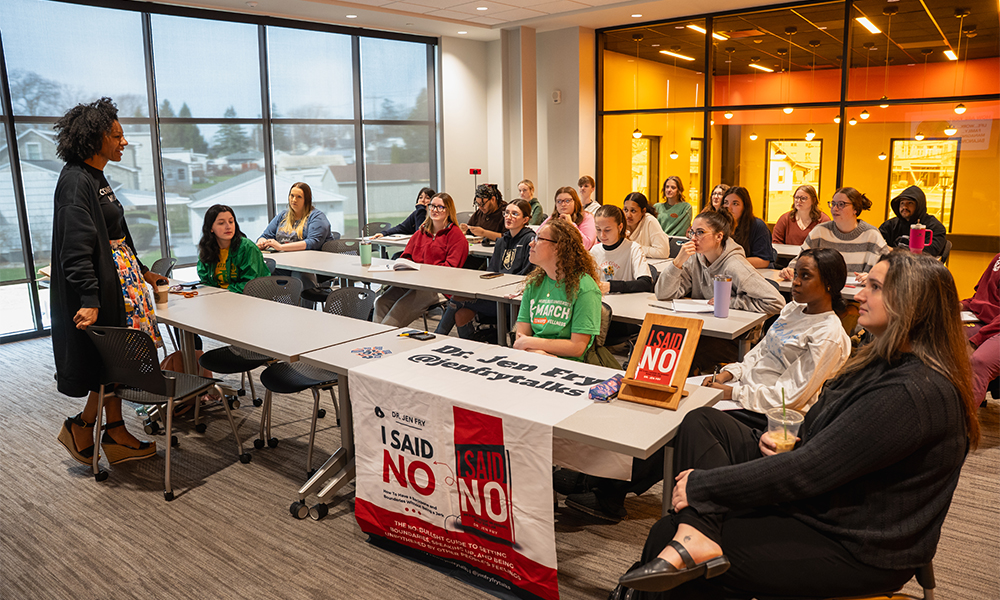
Heidelberg University welcomed Dr. Jen Fry to campus March 25–26 for a dynamic, two-day speaker series. The program, focused on conflict, communication, and personal growth, provided interactive sessions. Students, faculty, coaches, and student leaders engaged in conversations to reframe their daily approach to conflict.
.jpg)
As an internationally recognized speaker, educator, and conflict literacy expert, Dr. Fry guides individuals and organizations in navigating difficult conversations. She also helps them build stronger, more resilient communities. Through her organization, JenFryTalks, she highlights practical strategies. These strategies transform conflict from something to avoid into an opportunity for growth and connection.
Early in her sessions, Dr. Fry challenged attendees to reconsider their assumptions about conflict. Instead of always viewing it as negative or disruptive, she framed conflict as necessary for human connection and personal development. She explained that avoiding conflict does not create harmony and added that, in fact, discomfort is often fundamental to growth.
To foster honest dialogue, Dr. Fry introduced guidelines for open dialogue to encourage openness, respect, and engagement in uncomfortable conversations. Students reflected on conflicts by sharing their main concerns and the messages internalized from past relationships.
Drawing on her background in college athletics and team dynamics, Dr. Fry gave insights into conflict in groups and leadership. She encouraged students to examine how their communication styles shape relationships with friends, family, and future clients.
Through small group discussions, participants explored how their comfort with conflict affects their communication. These conversations showed a common tendency. Many try to avoid difficult situations to “keep the peace,” often at the cost of clarity and honesty.
Dr. Fry also emphasized setting boundaries and clear communication. She advocated honesty over avoidance and encouraged participants to say “no” when needed, rather than agreeing and risking later frustration or resentment. She noted how unspoken expectations can quietly build into larger issues.
As sessions continued, participants explored emotional awareness, accountability, and apologies in relationships. Dr. Fry urged attendees to consider their needs from others and what others may need from them in conflict.
Resolution, as Dr. Fry acknowledged, is not always guaranteed. In some situations, closure comes from within, not necessarily from another person.
By the end of the workshops, Dr. Fry left participants with practical takeaways. They learned to better understand their reactions to conflict, communicate their needs early, and build the confidence to engage in difficult conversations.
Heidelberg’s Master of Arts in Counseling program sponsored the event, funded by the university’s HRSA grant. The series offered the campus community a meaningful opportunity to engage in conversations that are often avoided but necessary.
By reframing conflict as a path to understanding rather than division, Dr. Fry’s visit offered a lasting reminder. Growth often begins outside of one’s comfort zone.
March 26, 2026