
Juneteenth ceremony invites reflection, celebration, commitment to the future
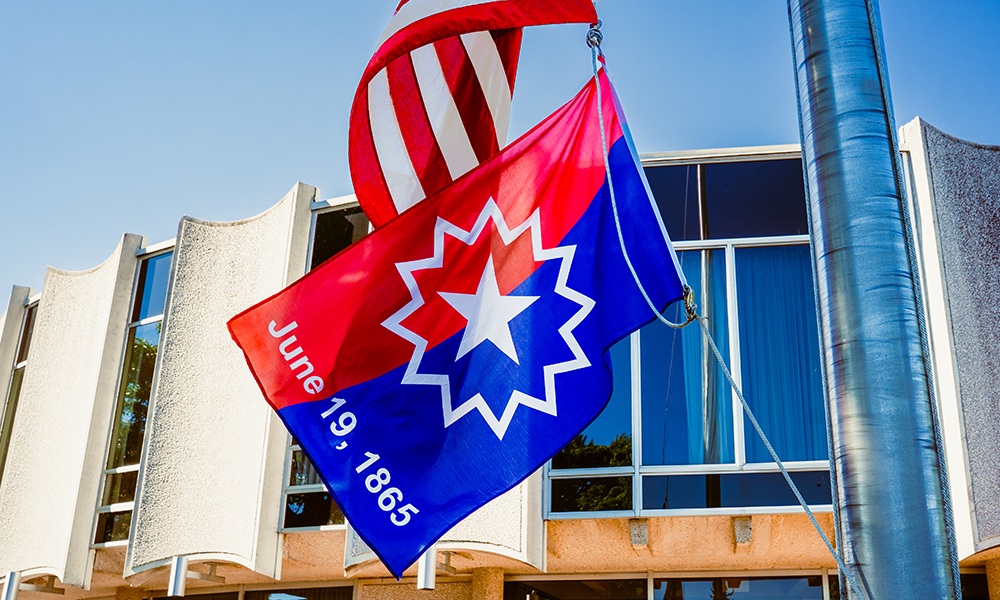
Juneteenth on Heidelberg’s campus is more than a celebration of freedom for Black Americans. It is an opportunity for reflection, remembrance, and renewed commitment to the work of building a more inclusive future.
This year’s Juneteenth flag-raising ceremony, organized by Director of Student Affairs Aaron Nelson, encouraged the Heidelberg community to reflect on the significance of the holiday while honoring the contributions of alumni and generations of Black Americans whose perseverance helped shape the nation.
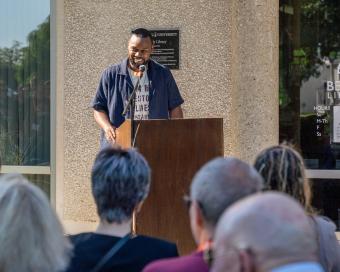
As he welcomed attendees, Aaron reflected on the themes that have guided previous Juneteenth observances at Heidelberg.
“Two years ago, we gathered to reflect on the confusion and unfulfilled promises surrounding General Order No. 3 in Galveston, Texas,” he said, referring to the order that enforced the Emancipation Proclamation in Texas and effectively ended slavery in the United States.
“One year ago, we reckoned with the limitations of the Emancipation Proclamation and the growing dangers of erasing or sanitizing difficult parts of our nation’s history.”
This year’s gathering focused on the choices communities make as they carry history forward.
“Today, we gather once again on June 19 beneath a unique cloud of witnesses,” Aaron said. “Juneteenth is not simply about remembering the past. It is about deciding what we choose to carry forward.”
For Aaron, freedom represents more than a historic date.
“It is an ongoing responsibility,” he said.
He described the declaration of freedom in 1865 as “a bridge stretching from the trauma of human bondage toward the unknown possibilities of citizenship, dignity and self-determination.”
“And bridges are heavy,” he added.
For more than a century, Black Americans have helped build and sustain those bridges through perseverance, cultural achievement, educational excellence, scientific innovation, civic leadership and an unwavering pursuit of justice.
“Juneteenth calls us to remember not only the resilience of those who survived slavery, but also the systems and decisions that made such resilience necessary in the first place,” Aaron said.
The ceremony also served as the opening event of Alumni Weekend 2026, providing an opportunity to recognize alumni whose contributions continue to influence Heidelberg today.
“When you built organizations, formed lifelong friendships, pursued excellence, challenged one another to grow, and carried your Heidelberg education into the world, you contributed to the foundation upon which today’s students continue to build,” Aaron told those gathered.
“That is part of what Juneteenth reminds us: that progress is never the work of one generation alone. It is sustained when communities choose to keep building pathways of opportunity, understanding and belonging for those who come after them.”
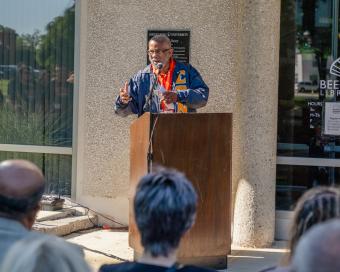
Aaron then welcomed distinguished alumnus Elrich “Pete” Green ’78, a businessman, public servant and community leader, who shared personal reflections on Juneteenth and the significance of the annual flag-raising ceremony.
“Juneteenth this year is doubly important as we celebrate America’s 250th,” Pete said.
While some view the Juneteenth flag as a symbol of division, Pete sees something different.
“It represents victory, freedom, jubilation, reverence and who we are,” he said.
Through genealogical research, Pete has traced his family history back to the Civil War era.
Although those discoveries could evoke feelings of anger or sadness, he said his experiences as a Heidelberg Student Prince continue to inspire a spirit of gratitude and unity.
On Juneteenth, that perspective becomes even more meaningful “as we all come together as one,” he said.
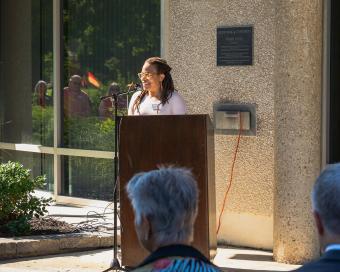
The ceremony also featured Associate Professor of Education Dr. Nichole Griffin reading a poem titled “The Birth of Free.”Aaron then led attendees in singing “Lift
Every Voice and Sing,” recognized as the Black national anthem since 1990.
Before the raising of the American and Juneteenth flags, Aaron shared the symbolism behind the Juneteenth flag’s design:
• The star represents Texas, where enslaved people learned of their freedom on June 19, 1865.
• The burst symbolizes a new beginning and renewed hope for Black Americans.
• The arc represents promise and future possibilities.
• The date serves as a reminder of the historic significance of Juneteenth.
Following the flag-raising ceremony, attendees continued the celebration with tapas, conversation, and an exhibit highlighting the history and legacy of Juneteenth.
Juneteenth on Heidelberg’s campus is more than a celebration of freedom for Black Americans. It’s the perfect time for reflection.
This year’s celebration, organized by Director of Student Affairs Aaron Nelson, provided a stage to think back to previous Juneteenth flag-raising ceremonies and embrace the circumstances surrounding today’s ceremony.
Two years ago, we gathered to reflect on the confusion and unfulfilled promises surrounding General Order No. 3 in Galveston, Texas,” he recalled. General Order No. 3 enforced the Emancipation Proclamation, which freed enslaved African Americans in Texas and effectively ended slavery in the U.S.
One year ago, “We reckoned with the limitations of the Emancipation Proclamation and the growing dangers of erasing or sanitizing difficult parts of our nation’s history,” Aaron said.
“Today, we gather once again on June 19th beneath a unique cloud of witnesses. … Juneteenth is not simply about remembering the past. It is about deciding what we choose to carry forward.”
Freedom is more than a date on a calendar. “It is an ongoing responsibility.”
The declaration in 1865 is representative of “a bridge stretching from the trauma of human bondage toward the unknown possibilities of citizenship, dignity, and self-determination,” Aaron said. “And bridges are heavy.”
For more than 100 years, Black Americans have helped to build and maintain bridges through their perseverance, cultural brilliance, educational achievement, scientific innovation, civic leadership and unwavering demand for justice, he noted.
Juneteenth celebrates all of those contributions. “Juneteenth calls us to remember not only the resilience of those who survived slavery, but also the systems and decisions that made such resilience necessary in the first place.”
The fight for freedom brings us to today, on Heidelberg’s campus, as we begin the celebration of Alumni Weekend 2026 and recognition of the contributions of alumni who helped shape our current campus community.
“When you built organizations, formed lifelong friendships, pursued excellence, challenged one another to grow and carried your Heidelberg education into the world, you contributed to the foundation upon which today’s students continue to build,” Aaron told those gathered for the Juneteenth ceremony.
“And that is part of what Juneteenth reminds us: that progress is never the work of one generation alone. It is sustained when communities choose to keep building pathways of opportunity, understanding, and belonging for those who come after them.”
Aaron welcomed distinguished ’Berg alum Elrich “Pete” Green ’78, a businessman, public servant and community leader, who delivered his personal reflections about Juneteenth and flag raisings.
“Juneteenth this year is doubly important as we celebrate America’s 250th,” Pete said, who noted that for some, the Juneteenth flag symbolizes divide. But for him, it represents “victory, freedom, jubilation, reverence, and who we are.”
Through genealogy research, Pete has traced his family lineage to the Civil War. Though history lessons could perpetuate attitudes of anger and sadness, the opposite is true for Pete as he reflects on his time as a Heidelberg Student Prince. On Juneteenth, that mindset is even more magnified “as we all come together as one.”
Heidelberg’s Junteenth flag-raising ceremony also featured the reading of a poem, “The Birth of Free,” by Dr. Nichole Griffin, Associate Professor of Education. Aaron led the group in singing “Lift Every Voice and Sing,” recognized as the Black national anthem since 1990.
Prior to raising the American and the Juneteenth flags, he also explained the symbolism of the elements of the Juneteenth flag:
• The Star represents the state of Texas, where enslaved people were freed on June 19, 1865
• The Burst represents a new star, a new beginning, new hope and hope for Black Americans
• The Arc represents promise and possibilities in the future
• The Date ensures that the historical event is not forgotten.
Following the flag-raising, guests continued the celebration with tapas, conversations and an exhibit showcasing the history of Juneteenth.
June 19, 2026