The men behind the music: The story of the authors of 'Sweet Alma Home'
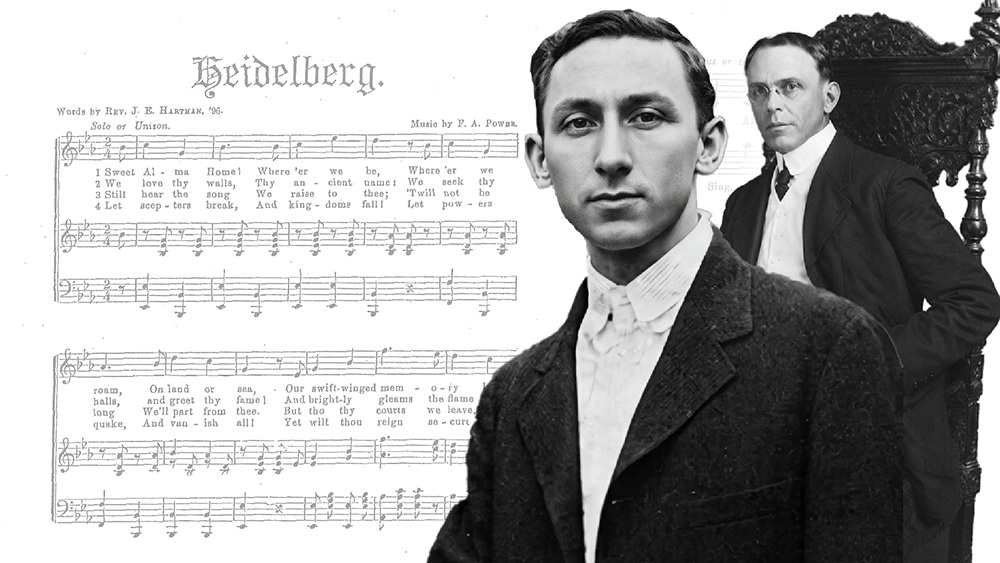
It’s Homecoming Week at Heidelberg. To kick off the celebration, we bring you this inside look at how Heidelberg’s alma mater, Sweet Alma Home, came to be. This article was written by alum Chris Mustain ’87 with research support by Caleb Silvia ’26 and Rylan Clarkson '27.
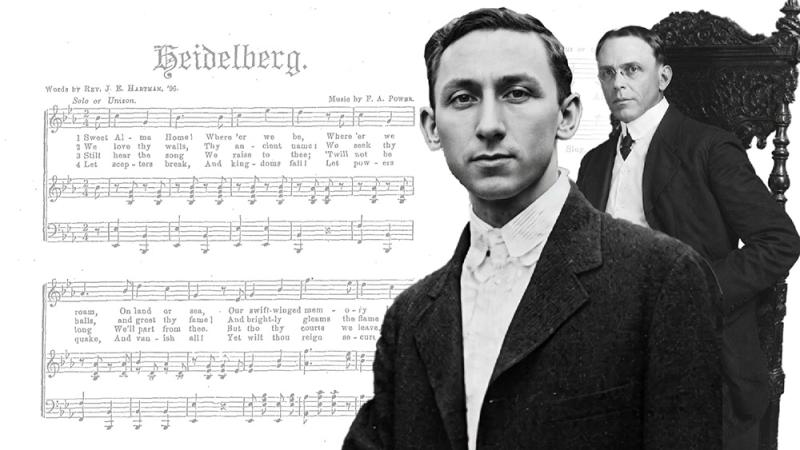
On the first day of spring in 1896 – Thursday, March 19 – an evening crowd filled Rickly Chapel for the Ohio State Oratorical Association contest hosted by Heidelberg University. The event kicked off with students from five other colleges performing their school songs. And then a group of students from the host institution took the stage. They delivered a song that had been put to music just hours before. For the very first time “Heidelberg” was heard, a song most of us know as “Sweet Alma Home.”
If you look at the sheet music, you’ll see that the lyrics were written by J.E. Hartman and the music by F.A. Power. A few might be familiar with the story of how these two young men created such an enduring piece of Heidelberg’s culture. But who were they? How did they catch lightning in a bottle in 1896 without really working together? What was their life like after their time in Tiffin?
Prelude
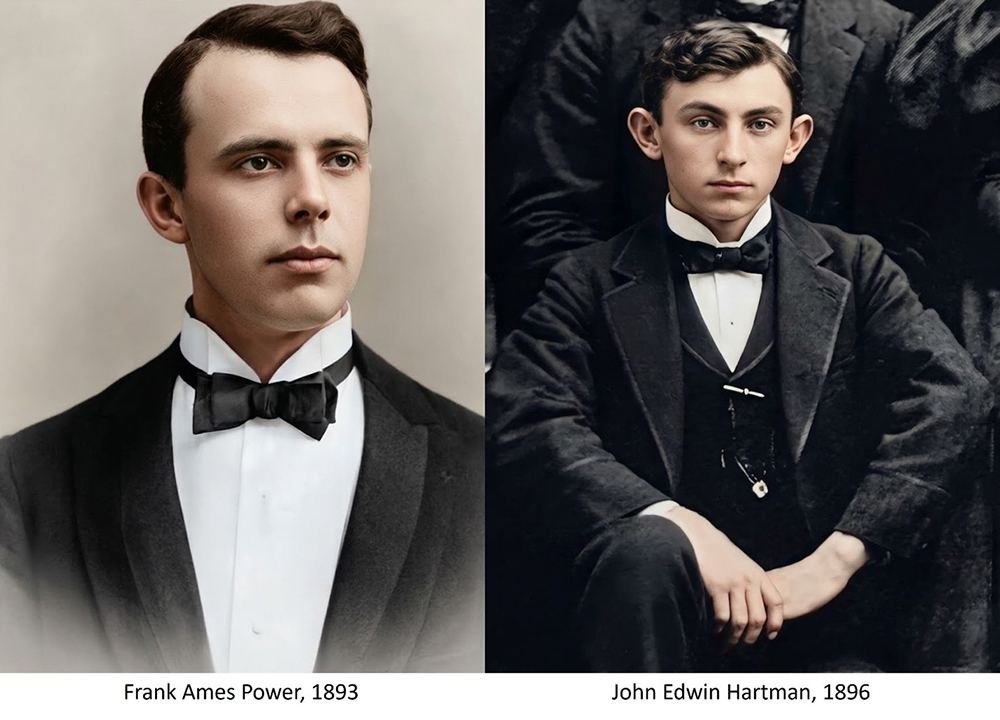
Frank Ames Power was born May 8, 1870, in Milroy, Indiana. His mother died when he was 7 years old, and he and his three sisters were raised by his father, who was a farmer, along with an aunt and a stepmother. In the early 1890s, he enrolled at DePauw University in Greencastle, Indiana, where he earned his degree and participated in choral groups. By 1895, Frank was working as a music teacher for the Tiffin Public Schools and as a conductor of a community chorus in Fostoria.
John Edwin Hartman was born November 17, 1875, in Lehighton, Pennsylvania. His father, a reverend, had immigrated from Prussia and his mother from Switzerland. They often spoke German at home. He was the oldest of six children, with three brothers and two sisters. John, who often went by J.E. or Edwin, was a senior at Heidelberg in 1896 and was preparing to become a reverend himself. The Aurora notes his nickname as Stumpy. He was a member of the Excelsior Literary Society and an editor of the Kilikilik. His younger brother Charles attended Heidelberg and also joined the clergy.
Sweet Alma Home
When Heidelberg was selected to host the oratorical competition, students suggested that the college ought to have a song like the other institutions set to visit the campus. A three-person committee was formed to write the song with John Hartman, age 20, as the chairman. The other committee members urged him to write the song himself, and so he retired to his dorm room and did so. In a 1946 letter, Hartman stated, “How long I labored I don’t recall.” He claimed the composition required little time, came probably “by a happy inspiration,” and was “a sort of literary accident.”
The student body accepted the lyrics, and Hartman noted that from there the song left his hands. Other students took the words to the head of Heidelberg’s Conservatory of Music, but he struggled to write a score. In desperation and 24 hours before the oratorical contest, the students took the lyrics to not quite 26-year-old Frank Power. The music instructor was hesitant to try on such short notice, but the students insisted, and he eventually agreed.
After struggling throughout the day, an inspiration hit Power on his walk home, and he stopped on the streets of Tiffin to write down the theme. He rushed home to finish the work moments before the students burst into his room to retrieve it. In addition to the music, Power added the repetition in the chorus (Sing till the echoes bring back the lay) to complete the melody and bring the chorus to a climax.
Hartman credited Power with the song’s appeal. “I have always been convinced that the music, rather than the words, has made the song acceptable and even popular,” he wrote. Hartman explained that the irregular meter required “a distinctive and original melody” rather than a familiar tune.
Hartman described the applause for the song that night as spontaneous and tremendous. He observed that it was very different from the other, more boisterous songs. The new Heidelberg song was “rather plaintive and appealing” and “off to a most propitious start.” Indeed it was, for it has endured now for 130 years.
The Professor and the Pastor
None of the accounts of Power and Hartman suggest that they met that night or knew each other. No records indicate that they met afterwards or corresponded. But there were a few ironic similarities in their future paths.
Both men left Tiffin soon afterwards to pursue additional education. Both men married a woman named Cora. Frank Power served as a choir director for Presbyterian churches in Ohio, Oklahoma, and Kansas. John Hartman served as a pastor at Presbyterian churches in Ohio, Indiana, and Pennsylvania. They both enjoyed long and successful careers.
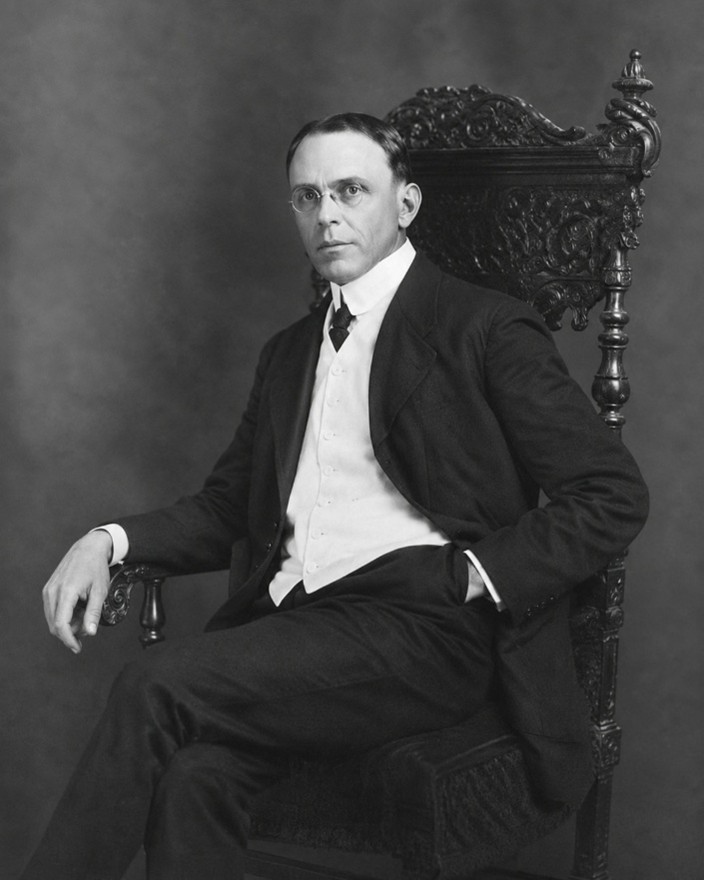
Power married Cora Myers in 1899. He lived briefly in Mansfield, Ohio, and then attended the Cincinnati Conservatory of Music, which included advanced study in Germany. He had a daughter in 1902 and a son in 1904. His son tragically died six years later.
For 23 years, he lived in Wichita, Kansas, where he became the Director of the Fairmount College Conservatory of Music. He also was a professor of voice, organ, and piano. Professor Power wrote light operas and original songs and was active in many local choirs and civic groups like the Rotary Club.
Fairmount reorganized as the municipal University of Wichita, and eventually Wichita State University. Power also founded the Power-Myers Conservatory and remained in Wichita through 1926 when he moved to Missouri, then Oklahoma, to live closer to his daughter.
In 1938, he moved back outside of Wichita to El Dorado, Kansas, where he died in 1940. Frank Power is buried in Wichita with his wife and young son.
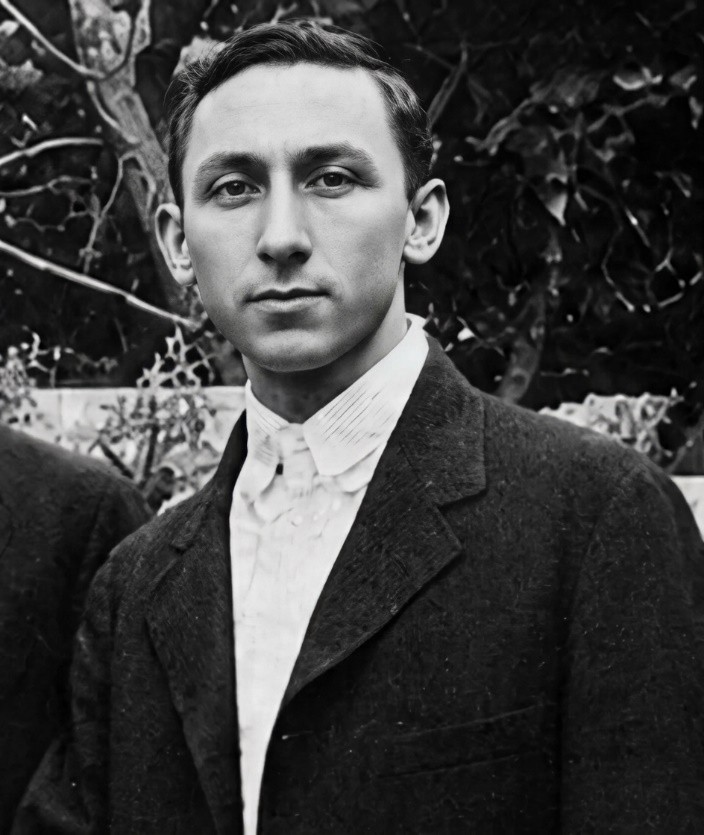
Hartman traveled from Tiffin to study at the Chicago Theological Seminary. He was ordained in 1899 and married Cora Strawman in 1901 in Sandusky, Ohio. His son, John Herman, was born in 1907.
For a little over a decade, Hartman served as a pastor at four churches in Indiana and Ohio. His last ministry in Ohio came to a close in dramatic fashion. The same flood that devastated Tiffin in March 1913 impacted a large swath of Ohio, including Dayton, where Hartman was an assistant pastor and was running a chapel of the First Presbyterian Church.
“We saw the terrible wall of water rushing toward us swift as a train,” he wrote. For several days, Hartman and his wife were stranded in their loft with eight other refugees; the lower levels flooded. The flood would claim over 360 lives in Dayton, destroy 20,000 homes, and displace nearly 65,000 people.
Although Hartman fared better than most, he wrote his parents during the flood that, “We’ll never settle down here.” By September 1913, he was the pastor of the Reunion Presbyterian Church in Mount Pleasant, Pennsylvania. Reverend Hartman would serve there for the next 38 years. He was awarded a Doctor of Divinity degree from Waynesburg College in 1943.
After Cora died in 1935, Hartman was remarried four years later to Matilda Carlson Pearson. They lived in nearby Scottdale, Pennsylvania for 22 years until he died in 1961. He is buried in Scottdale with Matilda.
Sources:
Ancestry.com. Birth, Death, Marriage, Passport, and United States Census Records, 1870-1940
DePauw University. The Mirage. 1893
Fairmount College. Parnassus. 1908
Fairmount College. Parnassus. 1925
Findagrave.com. Memorials for John Hartman and Frank Power
Heidelberg University. The Aurora. 1897
Heidelberg University. The Aurora. 1926
Newspapers.com. News stories and obituaries from publications in OH, KS, and PA.
Reunion Presbyterian Church Archives
The Ohio State University Libraries. The Lantern. 22 April 1896
Walsh, Andrew. A Minister’s Eyewitness Account of the Great Flood of 1913 from North Dayton, Dayton Vistas, 24 Sep 2025
Williams, Edward. Heidelberg, Democratic Christian College, 1850-1950. George Banta Publishing: 1952
October 19, 2026